When to reach for HDHMR instead of plywood
If the paint is the finish, the substrate has to be grainless. A short case for engineered board.
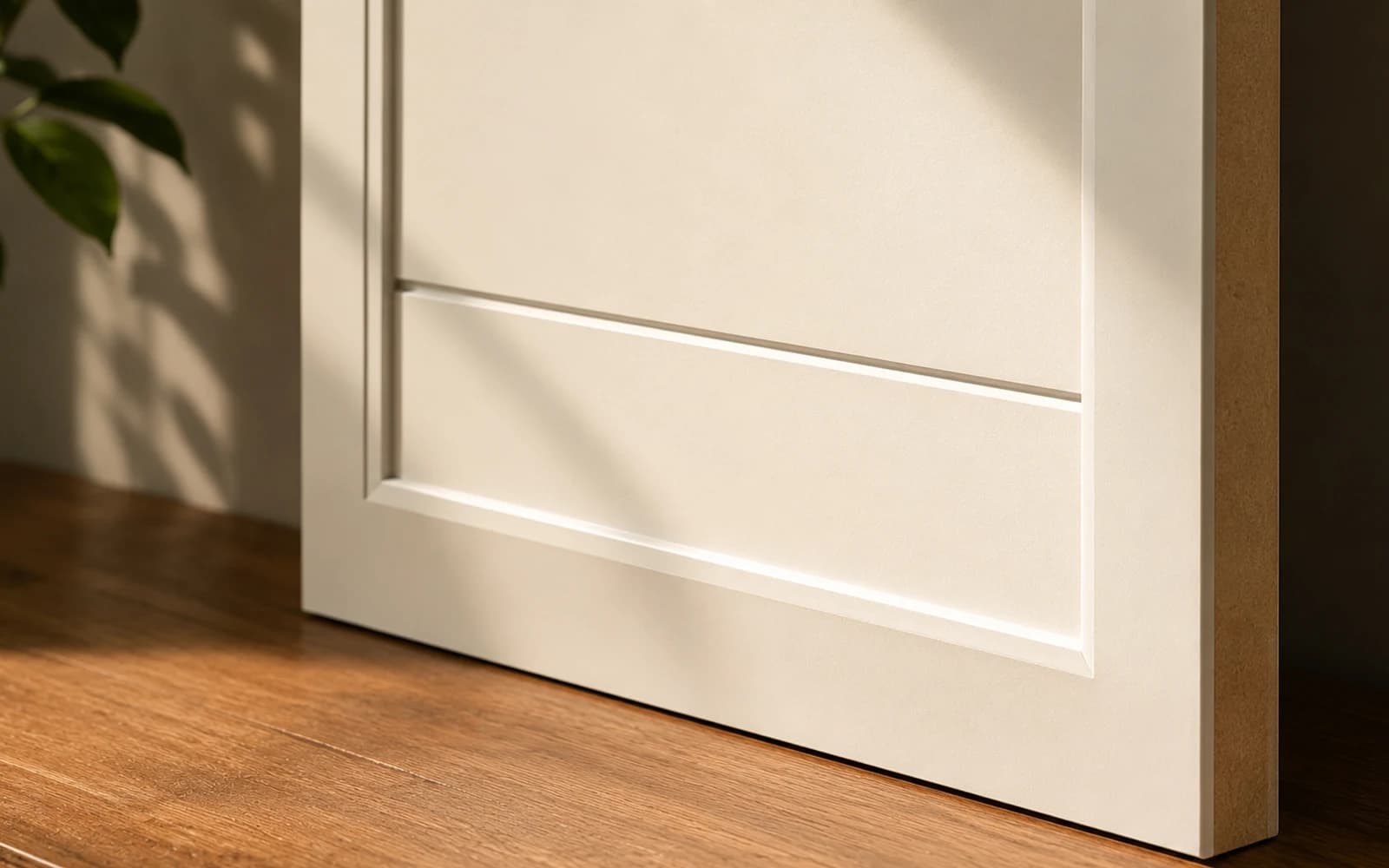
Painted joinery is unforgiving. Any grain, any core void, any inconsistency in the substrate will read through a sprayed finish under raking light — and it will read more clearly, not less, as the paint cures.
That is the case for HDHMR. It is a homogeneous panel with no grain direction and no internal voids, so a routed profile comes out crisp and a sprayed surface sits flat. For membrane-pressed shutters, louvres and CNC-routed panels, it is the correct substrate rather than a substitute for one.
The trade-off is edge fixing. HDHMR holds a screw well in the face and less firmly in the edge, so use a coarse-thread screw made for engineered board, or an insert where the fixing carries load.
For a painted kitchen: HDHMR shutters on a BWP plywood carcass. The shutters get the flat finish, the carcass gets the water resistance and the fixing strength where the hinges land.